
Weekly business planning — turn your annual goal into daily actions
You start the year with a goal to grow your practice. You know you want to introduce a programme. Then Monday arrives, clients are booked, and the programme is still sitting on your list.
What exactly needs to happen today?
That is the question I want weekly business planning to answer. I start with the result for the year and work backwards until I can see the work, the person responsible and the date. Each task has a reason for being there.
I use this approach in my own business and used it on the business side of a practitioner-led service. It improved my productivity. I knew where to start, what was due and how the work connected. I believe that way of organising the business contributed to our growth.
Let me show you the whole process with one example.
Give weekly business planning a clear annual goal
Imagine a practice that earned A$100,000 last year from individual sessions. The practitioner wants to increase revenue to A$150,000 by 31 December 2027.
They look at the services people use, the questions clients ask and requests that keep coming up. Several clients would value a planned series of sessions with support between visits. The practitioner checks their available time and decides to develop a package alongside individual appointments.
For this illustration, the annual plan has two contributions.
- Existing individual sessions generate A$100,000.
- The new programme generates another A$50,000.
A package priced at A$1,000 would require 50 sales to contribute A$50,000. The A$50,000 assumes these packages add revenue while individual sessions still contribute their A$100,000. That gives the practitioner something specific to plan around. The package might contain four sessions and two short follow-ups between appointments. Research, delivery costs and the time available will determine whether that price and volume make sense.
These are example planning figures. The practitioner will review them as they learn what clients choose and how much work delivery takes.
Put the existing business into the calendar
My weekly business planning starts with the work that already keeps the practice running. I put that into the calendar before adding the project.
I would block the session times, discovery calls and the preparation and follow-up each requires. Then I would give the regular marketing, bookkeeping and operational work a place in the week. For example, the practitioner might keep two hours each Friday for invoices and records, so that work stays current.
Now I can see the time available to build the programme. In this example, the practitioner can protect three hours a week for development. Once clients join, delivery will need its own space as well.
This matters because both parts of the revenue goal need attention. Existing services still need clients, marketing and administration while the new programme is being built.
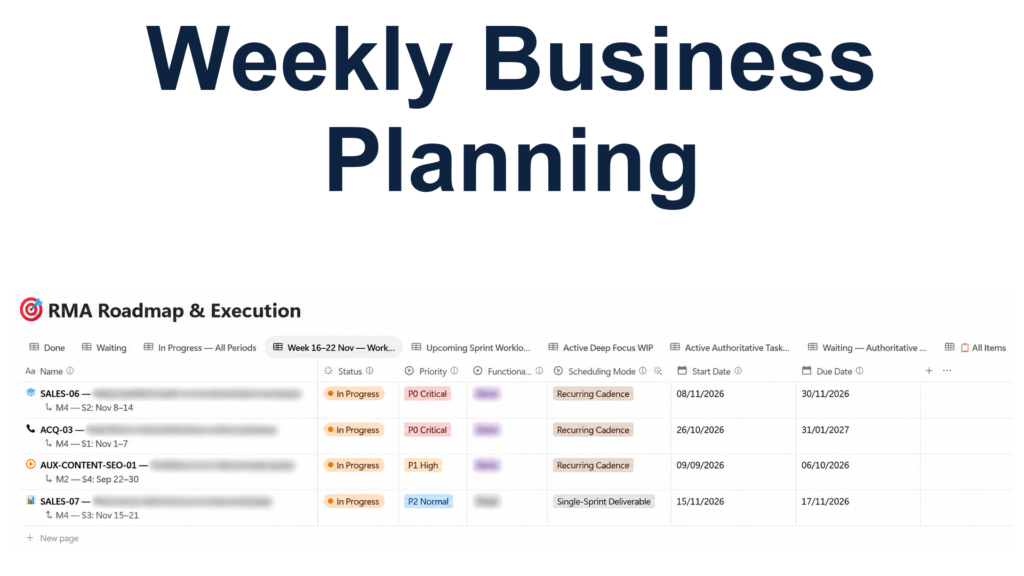
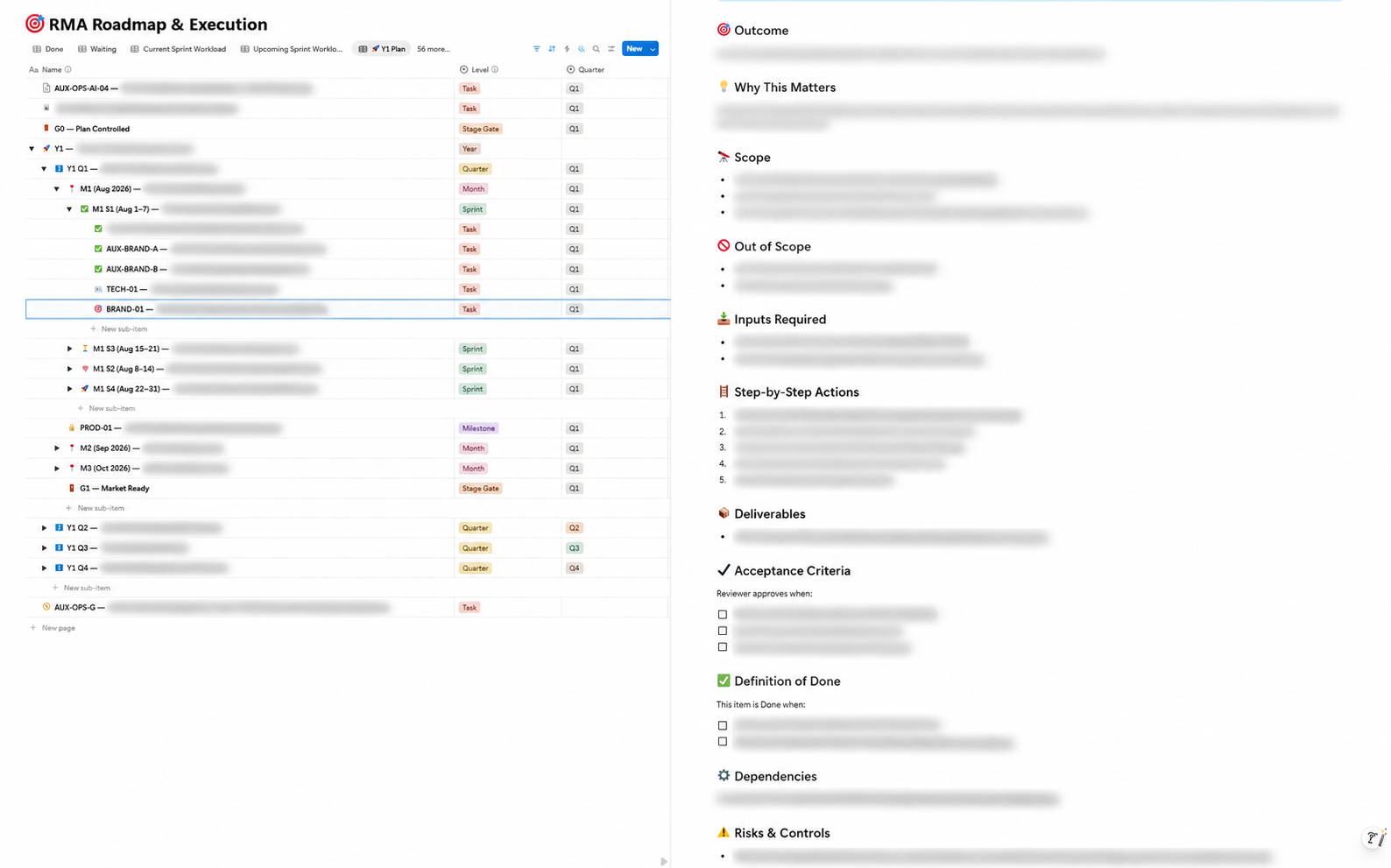
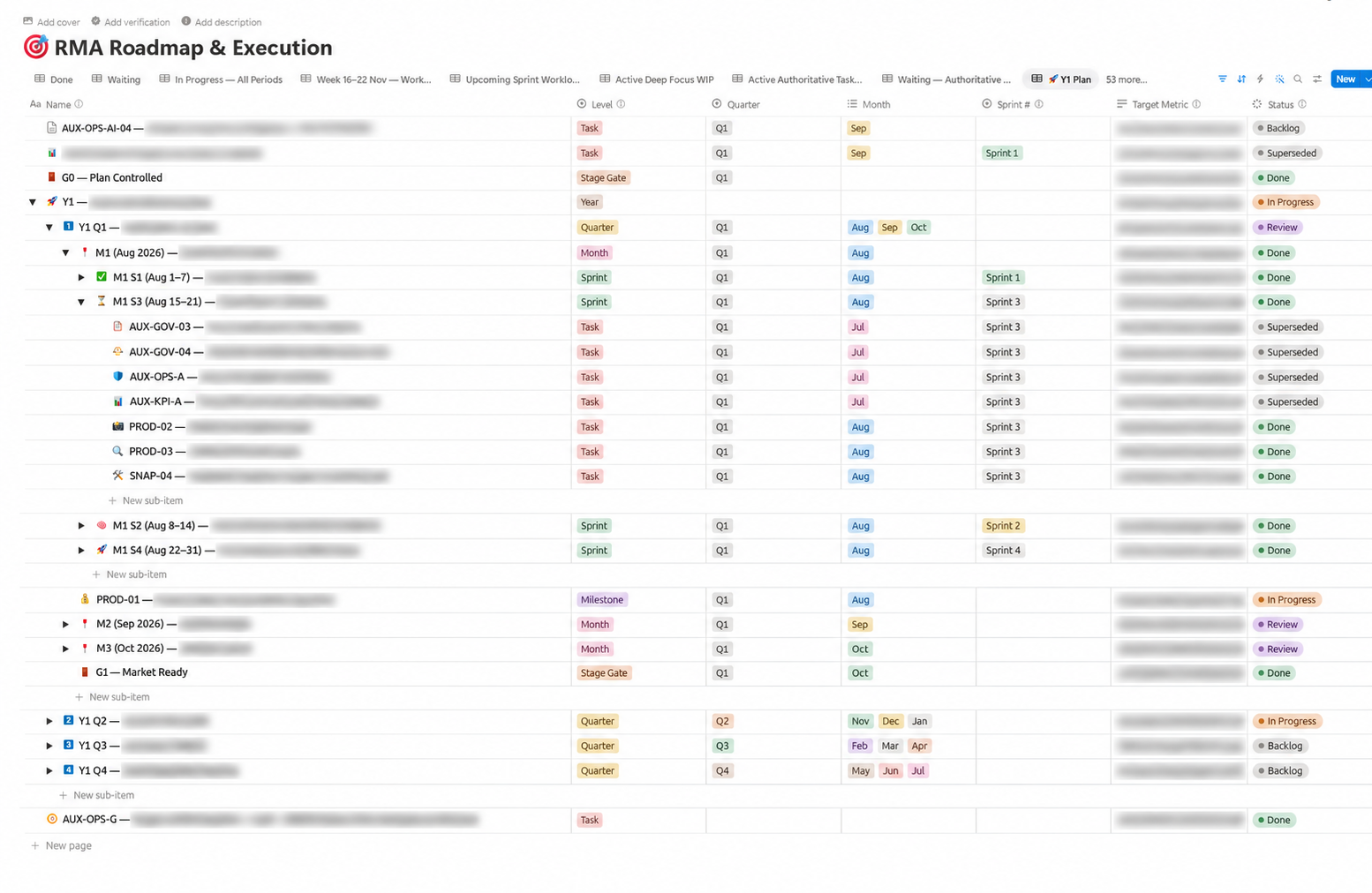
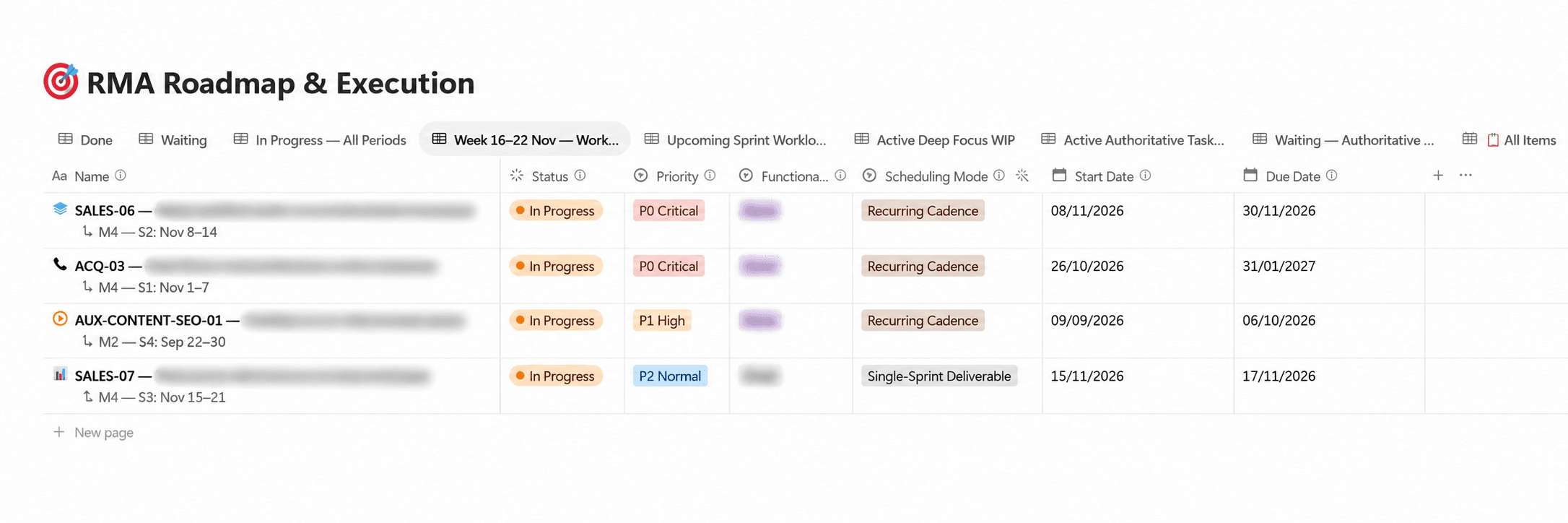
In my project-management workspace, I group the work by function and project. Marketing has its activities, finance has its activities, and the programme has its own plan. Each item shows who owns it, when it is due, what completion looks like and where to find the instructions. In a solo practice, the same person may own every item. The work still needs to be visible.
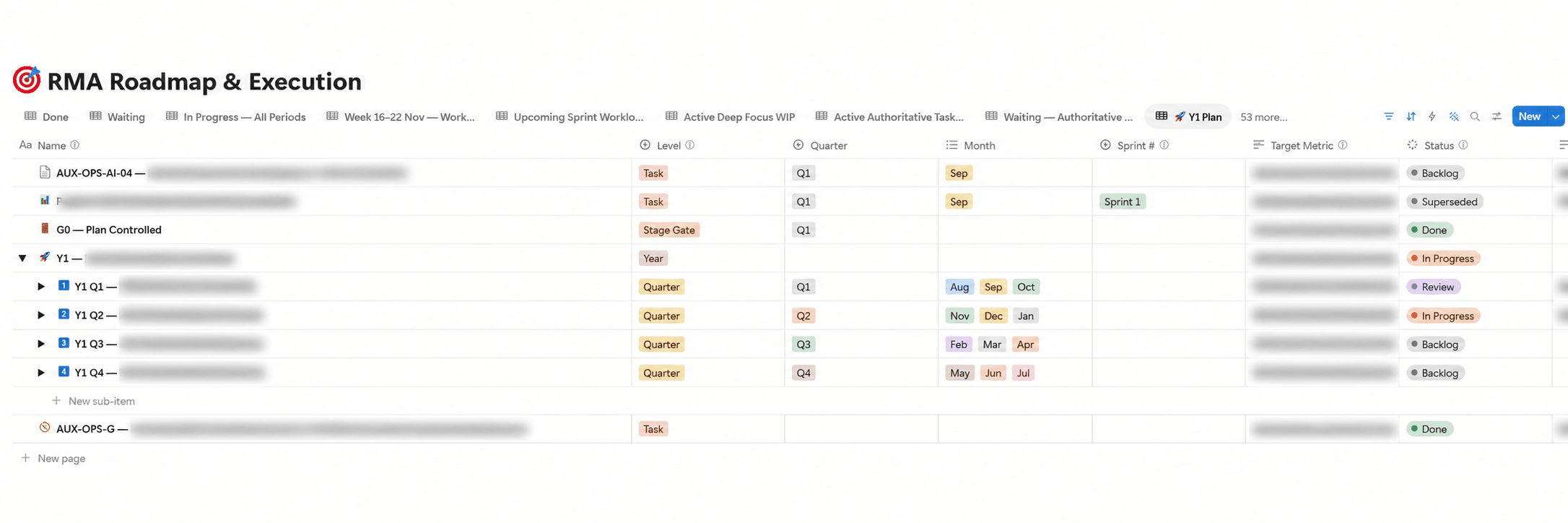
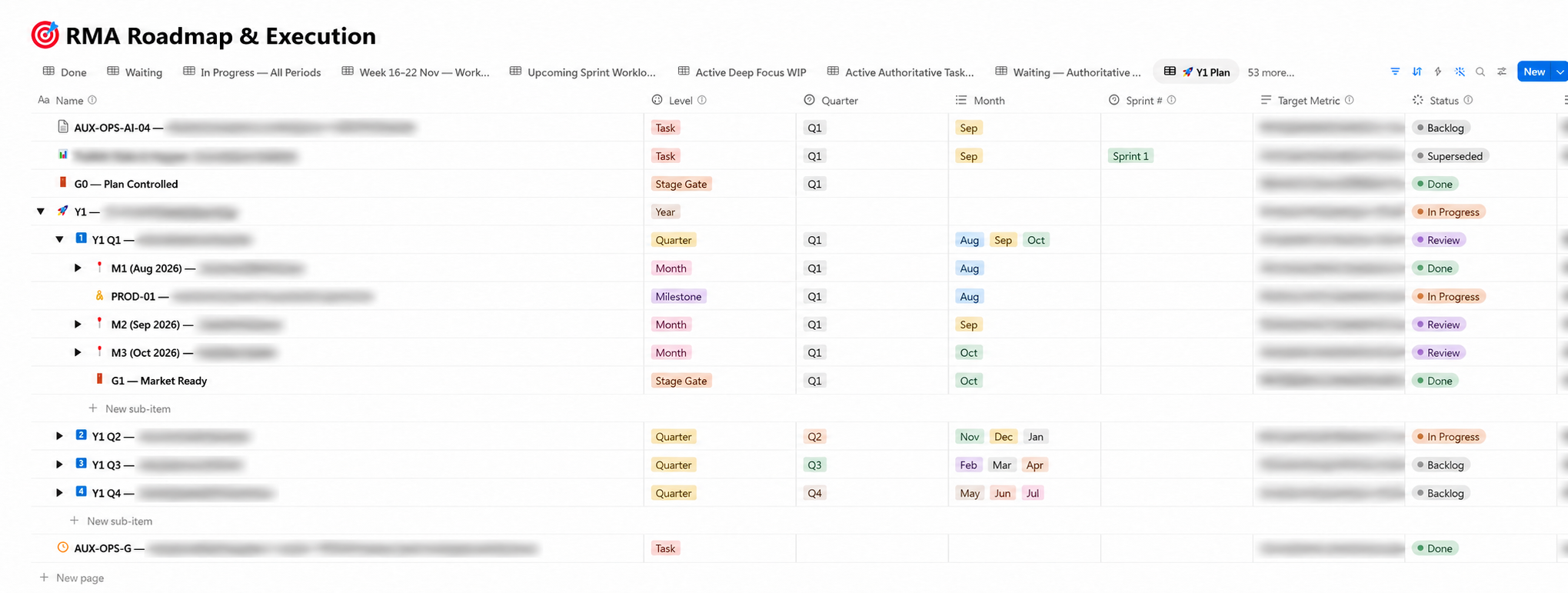
These redacted screenshots show my own workspace, which starts its planning year in August. The programme and January-to-December figures in this article are a worked example.
Break the year into four quarterly milestones
The next question is what needs to be achieved by the end of each quarter.
For the programme, I would map the year like this.
| Quarter | Programme milestone |
|---|---|
| January–March | Complete the research, define the package and price, and prepare the booking and delivery process for an April launch. |
| April–June | Launch, sell and deliver the first 10 packages. Review client feedback and the time each package actually takes. |
| July–September | Apply the improvements, then sell and deliver another 20 packages, bringing the total to 30. |
| October–December | Sell and deliver the remaining 20 packages and review the full year's result against the A$50,000 programme target. |
These are working targets. The later intake dates need to leave enough time to finish each package before year-end. Every intake's sessions, follow-ups, preparation and administration must fit alongside existing appointments.
Each milestone gives me a point to check progress. By March, I should be able to see a defined offer and a working booking process. By June, I should have actual experience of selling and delivering it. That information helps me decide whether the later targets and schedule are realistic.
My weekly business planning covers the regular work throughout all four quarters. I review its revenue and workload alongside the programme, because the annual target depends on both.
Break the first quarter into three monthly outcomes
Now take the first quarterly milestone and ask what January, February and March must each produce.
January — complete the research. Review recurring client requests, speak with suitable clients about the support they want, examine comparable offers and check available delivery time. Finish with a clear description of who the programme serves and what it will help them do.
February — finish the programme design. Decide the session sequence, support between visits, price and delivery schedule. Finish with a package the practitioner can explain and realistically deliver.
March — prepare the launch. Complete the programme page, booking and payment steps, client information and launch communications. Test the process before opening bookings in April.
The order matters. February uses what January found. March needs the package decisions from February. This is how I turn annual business goals into weekly tasks without losing the connection between them.
Use weekly business planning to finish one monthly outcome
Let's follow February. The outcome is a programme ready for launch preparation.
February 2027 has four full Monday-to-Sunday weeks, so the practitioner can give each week one clear result.
- 1–7 February — define what the package includes. Agree the four sessions, the two follow-ups and the purpose of each.
- 8–14 February — check delivery time and price. Add up sessions, preparation, follow-ups and administration. Check the proposed fee against that work and the available calendar.
- 15–21 February — prepare the delivery materials. Adapt the existing session materials and prepare the information clients will need between appointments.
- 22–28 February — review the complete package. Walk through it from the client's first session to the final follow-up. Resolve gaps and confirm what March's launch work needs.
Now the practitioner can see what a successful week means. Weekly business planning gives each part of the month a finish point, with the next piece of work already visible.
Turn the first week's objective into daily actions
For 1–7 February, the practitioner needs to finish the package outline. The owner is responsible for all five actions below, using the three project hours already reserved.
| Day and time | Action and result |
|---|---|
| Monday, 9.00–9.30 am | Read January's research summary. Write the specific client need the programme will address. |
| Tuesday, 12.00–12.45 pm | Draft the four-session sequence. Give each session a clear purpose connected to that need. |
| Wednesday, 9.00–9.45 am | Define the two follow-ups, including when they happen and the support provided. |
| Thursday, 12.00–12.30 pm | Bring the sessions and follow-ups into one package outline. Check that each part fits together. |
| Friday, 11.00–11.30 am | Review the outline, resolve any missing detail and save the version to use for next week's time and pricing work. |
The appointments and routine business blocks still occupy the rest of the diary.
On Monday, the owner can open the research summary and begin. By Friday, there is a specific document to review. That document supports next week's pricing work, which supports February's package design, which supports the April launch and the annual revenue goal.
That is the connection I want from a weekly action plan for small business owners.
Review the plan at the same levels
Weekly business planning includes checking what happened. At Friday's review, I compare the result with the week's objective. If the outline is incomplete, I identify what is missing, assign the next action and adjust any work that depends on it.
At month-end, I check whether the monthly outcome is ready. At quarter-end, I review the milestone alongside actual revenue, client feedback and workload. At year-end, I compare the combined results of the existing services and programme with the annual goal.

I map the whole year through these levels, then keep updating the tasks and dates. A session may need more preparation than expected. Demand may be different. Someone may be unavailable. The plan needs to reflect what is actually happening.
Take your annual goal and follow one project down to the next working day. Write the quarterly milestone, the monthly outcome, the weekly objective and the dated action. Include the person responsible and what they will produce.
When I open my plan, I want to know what to work on, where to start and how it serves the goal. That is what makes the goal easier to work towards, one completed piece at a time.