


Does Everything in Your Practice Depend on You?
See where enquiries, follow-up, delivery and decisions depend on you—and choose one practical area to strengthen first.

Transitioning from a structured corporate job to becoming a coach or therapist is a journey filled with challenges and rewards. I know this path intimately because I’ve walked it myself. As an IT engineer, I spent years questioning my purpose and longing for a life where I could be my true self and live on my own terms. I was caught in the cycle of routine, wondering, “Is this really what life is all about?” It wasn’t until I faced and overcame these questions that I found my true calling in helping others break free from the same constraints.
For many professionals, the idea of stepping out of a traditional career path and into the role of a coach or therapist feels daunting. The fear of the unknown, the insecurity of a new identity, and the pressure of building a personal brand can be overwhelming. But I’ve been there. I’ve felt the sting of inevitable pitfalls and made my share of mistakes. Yet, it was these very experiences that shaped me into the coach and mentor I am today. I now use my journey to guide others who are asking the same questions I once did. I help them achieve freedom, autonomy, purpose, and value—things I had to fight hard to realize in my own life.
This article is dedicated to those professionals who, like my past self, feel stuck and are searching for a way to market themselves in a new career as a coach or therapist. I’ll share practical strategies, drawn from both my personal journey and professional experience, to help you build your brand and connect with clients who need what you offer.
The first step in marketing yourself effectively is to clearly define your niche and identify your ideal client. When I transitioned from IT to coaching, I knew I wanted to help professionals who felt trapped in their corporate roles, just as I had. This clarity allowed me to create content and services tailored to their specific struggles, making it easier to connect and resonate with them.
Example: I crafted my messaging to address professionals in high-pressure roles who are struggling with the question, “Is this all there is to life?” By sharing my story of transitioning from a structured IT career to a purpose-driven coaching practice, I was able to connect with my audience on a deep, personal level.
Your personal brand is your story, your identity, and your promise to your clients. It’s how people perceive you and what they think of when they hear your name. For me, my brand is rooted in authenticity—sharing the real struggles I faced and the lessons I learned along the way. This has been crucial in building trust and attracting clients who resonate with my journey.
Content marketing is one of the most effective ways to establish yourself as an expert and build trust with your audience. It allows you to share your knowledge, offer value, and demonstrate your expertise—all while attracting potential clients to your services.
Networking is crucial, especially when you’re just starting out. Building relationships with other coaches, therapists, and professionals can lead to valuable collaborations, referrals, and opportunities to reach a broader audience.
Social media is a powerful tool for reaching and engaging with your audience. But it’s important to use it strategically to build your brand and connect with potential clients.
Hosting free workshops or webinars is a great way to demonstrate your expertise and connect with potential clients in a more interactive setting. It’s also an opportunity to showcase your coaching style and provide immediate value.
A sales funnel is a strategic way to guide potential clients from their first interaction with you to booking a session or purchasing a package. It’s about creating a smooth journey that builds trust and provides value at each stage.
Testimonials and referrals are powerful tools for building credibility and attracting new clients. They provide social proof that your services deliver real results.
Example: One of my clients, who was once a high-performing executive struggling with burnout, shared a testimonial about how our sessions helped her realign with her values and develop a healthier work-life balance. Her story resonated deeply with others in similar situations, leading to several new clients who sought help for their own challenges.
Your growth as a coach or therapist is ongoing. Investing in your own development not only enhances your skills but also shows potential clients that you’re committed to providing the best possible service.
Building a successful practice as a new coach or therapist takes time, effort, and persistence. There will be setbacks, slow periods, and moments of doubt. It’s essential to stay patient and committed to your vision.
Marketing yourself as a new coach or therapist can feel overwhelming, but with the right strategies, it’s entirely achievable. By defining your niche, building a strong personal brand, leveraging content marketing, and authentically connecting with your audience, you can establish yourself as a trusted professional and attract the clients you’re meant to serve.
Remember, the path to success is not a straight line. It’s filled with twists, turns, and lessons along the way. But each step you take brings you closer to realizing your vision and making a meaningful impact in the lives of others.
If you’re ready to take your first steps toward building a successful coaching or therapy practice, I encourage you to start by reflecting on your own journey. What challenges have you overcome? What lessons have you learned? How can you use your unique experiences to help others?
For more insights and practical advice on building a successful practice, download my free eBook, “How to Find Your Purpose and Build a Life You Love.” It’s filled with personal stories, tips, and strategies to help you navigate your own journey to success.
Your journey starts now. Embrace it, and let your light shine. Remember, you have the power to create a life and career that truly fulfills you. And I’m here to help you every step of the way.
See where enquiries, follow-up, delivery and decisions depend on you—and choose one practical area to strengthen first.
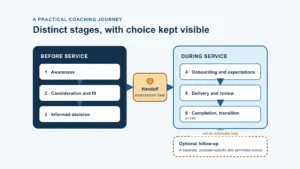
By Islam Abdullah, Founder of Reverse Mindset Academy A clear client journey keeps each stage visible and treats follow-up as a separate choice, not an
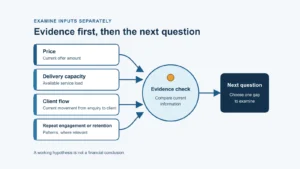
By Islam Abdullah, Founder of Reverse Mindset Academy Look at your offer, available time, enquiries and returning clients, where relevant, before deciding what to change.

By Islam Abdullah, Founder of Reverse Mindset Academy When people talk about business systems, the phrase can sound heavier than the work needs to be.

Explore six connected areas that may affect inconsistent client enquiries—and what to examine before spending more on marketing.

Introduction: The Battle Between Security and Freedom Security and freedom—two opposing forces that shape the choices we make in our careers and lives. On one
We use cookies to improve your experience on our site. By using our site, you consent to cookies.
Manage your cookie preferences below:
Essential cookies enable basic functions and are necessary for the proper function of the website.
Statistics cookies collect information anonymously. This information helps us understand how visitors use our website.
Optional website statistics for the Client Flow Snapshot. After affirmative Statistics consent, Google Analytics may receive one canonical page view, a scroll-depth event if 90% of the page becomes visible, and the approved start, completion and result-view milestones. Page view and scroll are auxiliary only and are not used as Snapshot completion or result. Snapshot answers, scores, result content, names, email addresses and client information are excluded.
Service URL: policies.google.com (opens in a new window)