

A small business process improvement example: when to keep a change
This fictional small business process improvement example shows how to judge a change by what it achieves, while protecting what already works.

I studied IT and earned a Bachelor’s degree in Computer Science, graduating in 2004. But by the time I finished, most of the programming languages I had learned were already obsolete. This was a pivotal moment for me, as it forced me to think outside the box and adopt a different mindset—one that would prove invaluable as I transitioned into coaching and entrepreneurship.
When I entered the coaching world, I quickly realized that a conventional approach wasn’t going to be enough. I had to be resourceful, think creatively, and leverage unconventional strategies to build a sustainable business. This mindset, developed over the years, has been instrumental in how I approach challenges, overcome obstacles, and build my career. In this article, I’ll share how this “thinking differently” mindset can help you navigate the financial realities of becoming a coach or therapist while maximizing opportunities.
Just like the programming languages I studied that became obsolete, many traditional career paths can leave you outdated if you don’t adapt. Becoming a coach or therapist doesn’t mean you need to spend tens of thousands on degrees or certifications. Instead, it’s about choosing education and training that are relevant, flexible, and aligned with the current demands of the coaching or therapy landscape.
Action Step: Choose a Learning Path That’s Aligned With Today’s Market Ask yourself what skills are most relevant to the clients you want to serve. If your focus is on personal growth or career coaching, you might not need a traditional therapy degree but rather specific certifications that match client needs.
Personal Insight: After discovering that my IT education had become outdated, I shifted gears. I started focusing on acquiring practical skills and knowledge through non-traditional means. Similarly, in coaching, I realized it wasn’t about having the most prestigious qualifications—it was about developing the skills that would best serve my clients.
When I started my coaching practice, I knew I had to rethink how I used resources to keep costs low. Just as I had adapted to the rapid changes in IT by finding new ways to apply my skills, I adopted a creative mindset to reduce my business overhead.
Action Step: Explore Space-Sharing Opportunities Instead of committing to an expensive lease, explore options to share office space with other professionals or offer virtual services to maximize flexibility.
Example: In the early days of my practice, I connected with a yoga studio owner who wasn’t using their space during weekdays. We struck a deal where I rented the space for a fraction of the cost, allowing both of us to benefit from the arrangement.
One of the greatest lessons I learned from my experience in IT was the power of outsourcing and leveraging global talent. In my coaching business, I applied the same mindset. By outsourcing tasks to professionals abroad, I was able to reduce costs significantly and focus on what I do best—coaching.
Action Step: Build a Global Team for Your Business Look at the non-core activities in your business. Find freelancers who can handle these tasks efficiently and affordably, giving you more time to focus on your clients.
Personal Insight: When I transitioned from IT to coaching, I applied what I had learned about outsourcing to keep my business lean. I found talented virtual assistants and designers from overseas who helped me manage my operations without the hefty price tag of local hires.
Marketing doesn’t have to be expensive to be effective. In the same way that I adapted to new technologies in IT, I had to find cost-efficient ways to market my coaching practice. By thinking differently and leveraging low-cost or even free marketing tools, you can build a strong presence without overspending.
Action Step: Create a Low-Cost Marketing Plan Identify key marketing activities like blogging, podcasting, or social media that you can do yourself. Focus on building your network and reputation organically.
Example: When I started, I relied heavily on content marketing and networking. Instead of spending on ads, I wrote articles, engaged with people in forums, and built relationships that helped bring in clients through word-of-mouth.
One of the most important investments I made when transitioning from IT to coaching was finding a mentor. Having someone who has been there before can save you from costly mistakes and guide you toward success.
Action Step: Find a Mentor Who Aligns With Your Vision Look for a mentor who has successfully built the type of business you aspire to create. Don’t be afraid to invest in their expertise—it’s one of the smartest investments you can make.
Personal Insight: After my first business failed, I realized that I needed guidance. I found a mentor who had successfully transitioned into coaching and used their insights to refine my approach. This mentorship was invaluable in helping me overcome the challenges I faced.
Failure is part of the journey, but it doesn’t define you. My first business venture failed, but it was through this failure that I learned how to think differently. It’s not about avoiding challenges—it’s about turning them into opportunities for growth.
Action Step: Use Failure as Fuel Reflect on past challenges and identify the lessons you’ve learned. How can you apply those lessons to help your clients?
Personal Insight: After my business failed, I took time to reflect on what went wrong and used those lessons to shape my future endeavors. It wasn’t easy, but it taught me to think differently, adapt quickly, and find opportunities where others saw failure.
Becoming a successful coach or therapist doesn’t have to follow a conventional path. By thinking outside the box, leveraging resources creatively, and staying adaptable, you can build a thriving practice while minimizing costs.
Key Takeaways:
Call to Action: Ready to build a sustainable, passion-driven coaching or therapy practice? Download my free eBook, “How to Find Your Purpose and Build a Life You Love,” for actionable strategies and insights to help you on your journey.
Get your free eBook here and start thinking differently about your path to success.
This fictional small business process improvement example shows how to judge a change by what it achieves, while protecting what already works.

See where enquiries, follow-up, delivery and decisions depend on you—and choose one practical area to strengthen first.
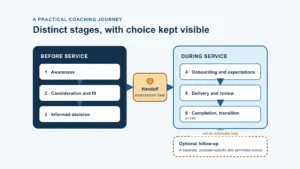
By Islam Abdullah, Founder of Reverse Mindset Academy A clear client journey keeps each stage visible and treats follow-up as a separate choice, not an
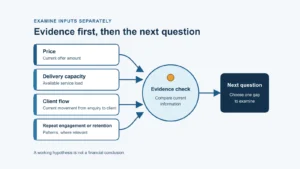
By Islam Abdullah, Founder of Reverse Mindset Academy Look at your offer, available time, enquiries and returning clients, where relevant, before deciding what to change.

By Islam Abdullah, Founder of Reverse Mindset Academy When people talk about business systems, the phrase can sound heavier than the work needs to be.

Explore six connected areas that may affect inconsistent client enquiries—and what to examine before spending more on marketing.
We use cookies to improve your experience on our site. By using our site, you consent to cookies.
Manage your cookie preferences below:
Essential cookies enable basic functions and are necessary for the proper function of the website.
Statistics cookies collect information anonymously. This information helps us understand how visitors use our website.
Optional website statistics for the Client Flow Snapshot. After affirmative Statistics consent, Google Analytics may receive one canonical page view, a scroll-depth event if 90% of the page becomes visible, and the approved start, completion and result-view milestones. Page view and scroll are auxiliary only and are not used as Snapshot completion or result. Snapshot answers, scores, result content, names, email addresses and client information are excluded.
Service URL: policies.google.com (opens in a new window)